Mark Your Soap with a DIY Stamp

Now that I’ve been making soap for a while and have mastered making usable bars, I’ve been wanted make them a little more attractive.

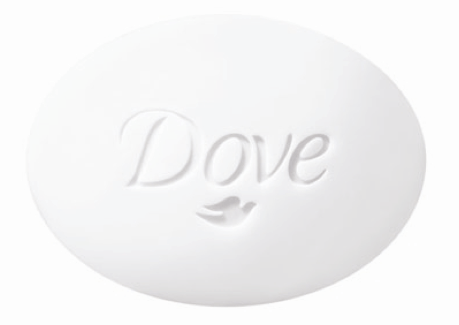
I grew up in a house that strictly used Dove soap and have always liked the little dove on each bar.

Picture-222

With that in mind, I set out to make a stamp so that my bars of soap could have their own mark.

Continue reading

Bentonite Clay Deodorant

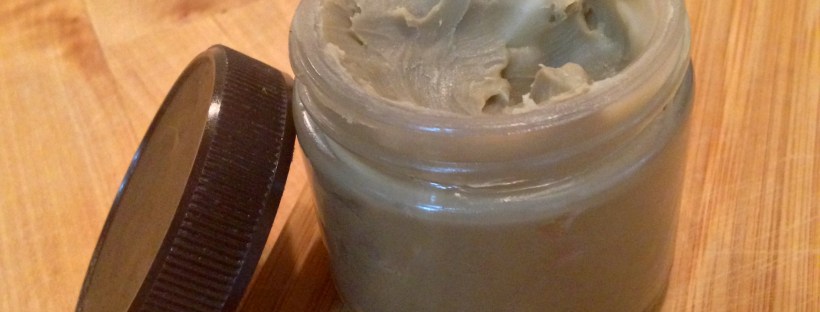
It’s been over a year since my first foray into homemade deodorant and last week, I finally ran out and decided it was time for an upgrade.

My original recipe was way too moody. During the summer (especially in my un-airconditioned apartment) it completely melted and all the solid bits slid to the bottom. During the winter, it was so rock-solid that part of my morning ritual became using a knife to pry a pea sized amount of the stuff out of the jar, sticking it under my arms, and brushing my teeth while I waited for it to melt before rubbing it in.

Continue reading

Conversion Aversion: Dealing With The English System of Measurement


The other day, I saw this handy conversion chart on The Kitchen:tumblr_n5w9ukYfmz1qzzlrvo1_1280

I loved the idea, but decided that it was a little complicated to read when I wanted to convert more than a single unit. Since I’ve been working on nailing down recipes – and not just mixing a little of this and a little of that and getting frustrated when I end up with exactly what I want and no idea how to duplicate it – for salves, deodorant, and chapstick, I thought I might go ahead and make charts for myself.

The volume chart includes “English” (because as far as I can tell, Americans are the only ones stupid enough to measure in cups and pints) and metric measurements, as well as drops if you’re using something pungent like an essential oil. It also includes common items that approximate each unit of measurement since not all of us know what a quart looks like.
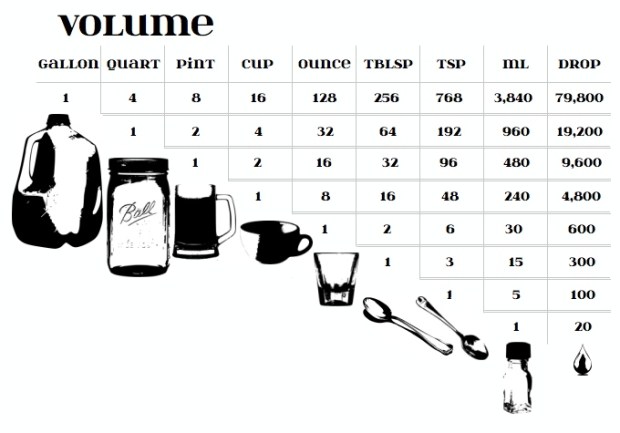
volume conversions

Click for a full-sized image

Luckily, mass is not quite as complicated. Most of us are familiar with what an ounce and pound feel like, if not a gram.

When measuring for body products, mass is really the best way to ensure that you’re mixing proper ratios. A tablespoon of beeswax, for example, weighs half as much as a tablespoon of olive oil if you pack it lightly, but up to the same weight as olive oil if you pack it tightly or melt it. Cooking by mass doesn’t hurt either, but most American ingredients tend to be measured by volume.

Measuring by mass also reduces your clean up at the end. Rather than using a separate measuring cup or spoon or different ingredients, you can tare a scale to the cup you’re using to mix and throw everything in.

mass conversions


The Science of Lip Balm, or, Why We Lube Up Our Lips

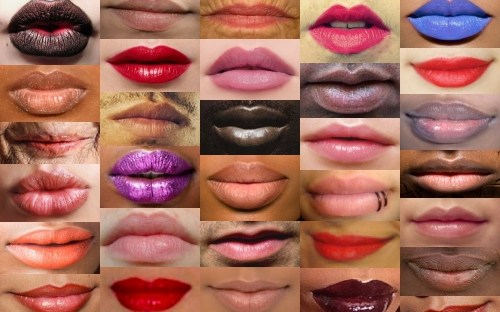
Ever wondered why lips are pinker than the rest of our bodies? As it turns out, it’s one of the reasons that we use chapstick.

Continue reading

Flaxseed Gel For All Your Coiffure Needs

Let’s talk about how sexy it is to run your fingers through someone’s hair after they’ve put gel or hairspray in it. Spoiler alert: it’s actually not that sexy. Even if you firmly reside in the “no one can touch my hair” camp (no worries, I’m your neighbor!), you have to admit that most hair holding concoctions leave a lot to be desired. They turn your thousands of lovely locks of hair into crunchy, hard clumps that have to be gently combed out so that you’re hair doesn’t break (ugh) or washed out before you even think about doing anything else with your hair (double ugh).

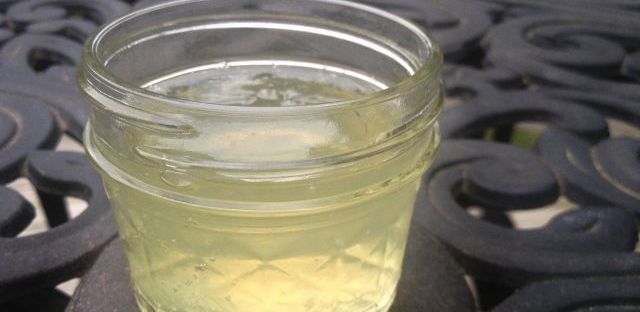
Flaxseed gel is not most gels. It somehow magically holds your hair in place while keeping it pliable. It doesn’t leave any buildup or flake off if you decide not to wash your hair immediately. And it’s next to free. The cost breakdown here is almost laughable because all you’re using is water, 2 tablespoons of flaxseeds (which go for $2-3/pound) and maybe a drop of essential oils. The only downside to it is that it’s a lot less shelf stable than most things I like to make. It’ll stay good for 2-4 weeks if you refrigerate it; meaning if you use a lot, you’ll probably have to make a new batch every month. Luckily, it takes less than 10 minutes to whip up.

Continue reading

Wax On, Wax Off

You know how those nights go. You’re home alone, it’s late and you’re poking around on Netflix hoping to find a movie good enough to justify staying up until all hours of the morning. You eventually settle for the first decent looking movie with the word “lesbian” in the description, only to find yourself exhausted at work the next day, wondering why you thought it was a good idea to pass up sleep for travesty that is Elena Undone.

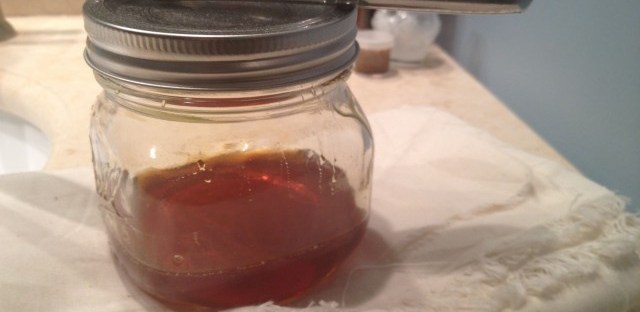
Caramel_posterThat’s how I found Caramel. The thing is, though, it didn’t suck. It was cute, the characters were interesting and insanely pretty, and I learned something new: you can wax your legs with sugar! Instead of feeling cranky the next morning, I leapt of of bed like an overexcited kangaroo and ran to the grocery. Three failed attempts and a melted candy thermometer later, I finally managed to make something usable.

Making caramel takes time and a little finesse. There are two ways you can go with it: the semi-solid, silly-putty route (like in the movie) or the painted-on liquid avenue. Today I’m going to teach you how to make the liquid version. The recipe is a little more forgiving because the temperature doesn’t have to be quite as precise for it to work, it doesn’t require nearly as much patience to use and you can easily bottle up your leftovers to use next time.

There’s something weirdly satisfying about waxing. Yeah, it’s time-consuming and messy, but it’s also a pretty fun way to spend an hour with yourself. That’s not to say it’s for everyone. Lots of people like shaving and lots of people like keeping their hair attached to their body and both of those things are more than fine. I’m okay, you’re okay.

But if waxing’s your thing (or might be your thing), start your crafty little engines. We’re talking honey-colored kitchen science candy that costs less than your tip at a salon.
Continue reading