Making Soap

Ever since I was little I’ve loved making “lotion potions.” My cousin and I would hunt through my grandma’s drawers, pulling out every hotel-sized lotion, soap and shampoo we could find. We’d grate the soap, mix up the lotions and sometimes even add a spritz of my grandma’s perfume – Eternity, which my grandpa still buys for her every year on her birthday – to make our creations smell good. Now that I’m all grown up (and have my own drawers full of stuff), I still love mixing up potions. There’s just something magic about taking whatever I can find and turning it into something that can clean, heal or beautify.

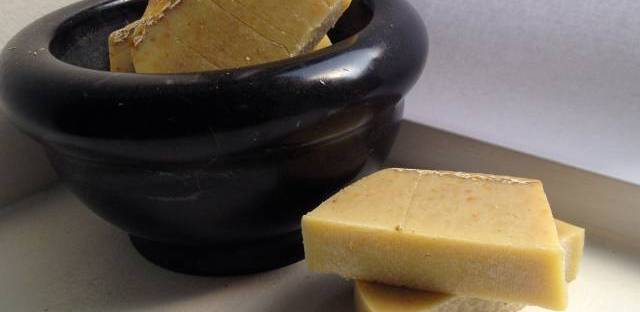
Soap is no exception. I started making my own soap last year for Christmas. It seemed easy enough and I wanted to give my brothers shaving brushes and soap. I ended up with 15 extra bars that I gave to my grandmas. They loved how soft it made their hands and so I, being the queen of dry skin all winter long, started making it for myself.
Continue reading

None of Your Beeswax Deodorant

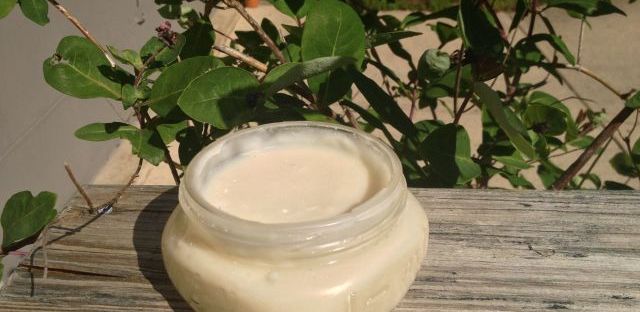
Contrary to popular belief, lots of hippies aren’t dirty. In fact, many of them smell pretty sweet, thank you very much.

I like to think that I smell positively floral. And a lot of that is thanks to my homemade deodorant. I’m gonna level with you here and let you know that the reason I initially switched to homemade deodorant (or any beauty products, really) wasn’t so much about my health as it was about a whole constellation of other things. Let me lay them out for you:

+ Cost: I find it really hard to part with my money when it comes to stupid things like toilet paper or tampons. Deodorant was just one more thing that I hated buying every month or so. But then buying the materials to make deodorant expensive too. $30 for a pound of cocoa butter? You’ve got to be kidding me. So I started with a cheap, easy recipe: coconut oil, arrowroot powder and baking soda. When I started making more of my own things, though, I started to realize that investing in raw materials wasn’t as expensive as I thought.

+ Product: The real thing that drove me crazy about store-bought deodorant was how sticky it made me feel. I didn’t like that I had to scrub under my arms every time I took a shower and I didn’t like how I could literally shave it off my skin.

+ Consumerism: Call me a crazy anti-capitalist lesbian feminist, but I like when I don’t have to buy something that’s been researched and marketed to me. I like not putting money in the hands of giant companies. And yes, I know that Whole Foods is just another one of those companies that does things like base prices for their healthcare on discriminatory pseudoscience. You can’t win them all, you know? As soon as I can find cocoa butter somewhere else, I’ll be running in their general direction.

+ DIY nerdiness: In the words of Angry Chicken, I understand that there are plenty of people who would read this and say “why would I bother making that?” And to those people I say: I feel you. I have never in my life felt any need to knit or make my own pickles. But this is a thing I enjoy making!

+ Health: Last but not least. So I’m not quite sure what I think about aluminum and cancer because scientists aren’t quite sure what they thinks about aluminum and cancer. But hedging my bets on that is a nice little bonus of making my own deodorant.


This stuff works differently from traditional deodorant and, as such, takes a little getting used to. Because it doesn’t block your sweat glands, you won’t feel quite as dry as you’re used to and this can be a little unnerving. I’m happy to report, though, that I’ve gotten nothing but positive reviews from my friends who I made smell me and assure me that I didn’t stink.

Even though it doesn’t prevent you from sweating, the powder added will absorb moisture, meaning that you won’t soak through your shirt. And if you’re worried about the oils and butters in this stuff staining aforementioned shirt, don’t worry! As long as you let it soak in for 30 seconds or so, you’ll be fine. I’ve been using this for months now and I haven’t noticed any oily (or sweaty) marks in my clothes.
Continue reading

The History of Soap

Many many years ago, there was a mountain near Rome called Mount Sapo. In honor of the goddess Athena, the people from neighboring towns would carry goats and sheep to the top of the hill and burn them atop a sacrificial fire. As the animal fat melted and mixed with the alkaline ash, soap formed and was later carried to the stream below by rain. The women in the towns did their laundry in this stream, finding that their clothes got cleaner at Mount Sapo than anywhere else.
Continue reading

Oatmeal and Lavender Soap

………….  
5.5 oz coconut oil Coconut oil gives your soap moisture, big bubbles and a harder bar. I buy mine at Trader Joe’s or Costco, but it’s pretty trendy right now so you can find it just about anywhere.
8 oz olive oil Olive oil gives a dense creamy lather and a soft bar.
4 oz water Water is used to dissolve the lye. It will evaporate as the bar sets.
1.97 oz lye You already know what lye does, but you might not know where to buy it. Check the drain-unclogging chemicals sold at at Lowe’s or Home Depot. As long as it’s 100% sodium hydroxide, you’re good to go.
1/4 t honey Honey is a natural humectant and will keep your skin soft. It won’t dissolve into your soap, so don’t add too much or you’ll end up with honey bubbles and oozy soap.
5 drops lavender essential oil Lavender oil is calming and helps keep itching from dry skin at a minimum.
1 t shea butter Shea butter is incredibly moisturizing. If you don’t want to buy any, you can add a teaspoon of any oil or butter.
1 T oats Oatmeal soothes dry skin and scrubs off dead skin. Grind it up fine (I used my magic bullet because I’m fancy) so that it doesn’t clog your drain.

Saponification Station

Soap is the metallic salt of a fatty acid. What in the world does that mean? Well, in chemistry, salt isn’t just the white stuff that always hangs with the pepper, it’s any product that comes from neutralizing an acid and a base. Let’s take kitchen salt (sodium chloride) as an example. When you combine hydrochloric acid (HCl) with sodium hydroxide (NaOH), you get sodium chloride (NaCl) and water.

HCl + NaOH –> NaCl + H2O

This is particularly cool because hydrochloric acid is crazy acidic (it’s the stuff that your stomach uses to break down food) and sodium hydroxide is suuuuper alkaline (remember the scene in Fight Club when Brad Pitt burns that ugly hole in Edward Norton’s hand? That’s lye AKA sodium hydroxide) which means achtung, baby! Put them together, though, and you get two completely safe and consumable substances.

Making soap – or saponification, if you’re savvy – is pretty much the same thing. Add lye to an oil and you get a salt that we call soap! More specifically, you combine a trigylceride with lye and end up with soap and gylcerine.

C3H5 COOR COOR COOR + 3 NaOH + (H2O) –> 3NaCOOR + C3H3 OH OH OH

You already know what lye is, but what’s about triglycerides? As it turns out, all the oils we’re familiar with are different types of triglycerides. If you look at the formula for triglyceride, you’ll notice there are some R’s up in there. Those R’s stand for fatty acid radicals, three of which are combined to create a single type of oil. Olive oil, for example, is made up of two oleic acid radicals and one palmitic acid radical. Because of their chemical makeup, different oils and fats have specific properties that can be helpful or harmful in soap making. We’ll talk more about this when we get to the recipe.

The glycerin that’s a byproduct of the reaction is one of the best reasons to make your own soap. Glycerin is a humectant (a thing that keeps moist things moist) and makes your skin soft and moisturized. Often, store-bought soaps have been stripped of most of their glycerin, which is then sold to be used in more expensive bath products.