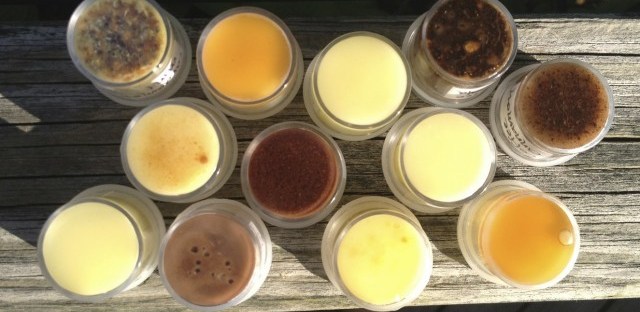
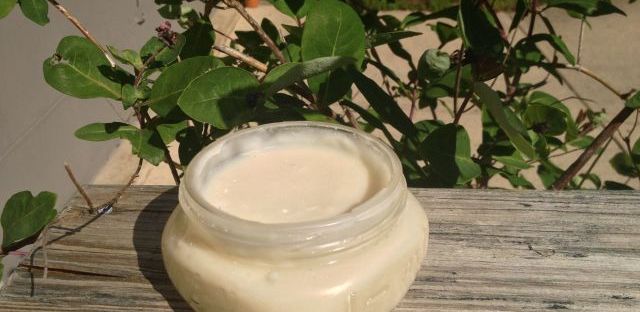
Bottle Cap Clamshell Caboodle

So. You’ve been making all this fancy DIY beauty stuff. You’ve got your own tiny apothecary filled with chapstick and wax and face oil and dry shampoo, but where are you storing it all? True, it’s what’s on the inside that matters, but everyone appreciates a pretty little something, right?

Since Laneia and I are going to be making chapstick with our campers, we’ve got a how-to so you can play along at home. Before you mix up your lip balm, why not have a few beers and make a container for it? It’s a little bit time consuming and you just might super glue your fingers together, but the finished product is worth all the work.
Continue reading

Making Lip Balm

The summer after 7th grade, I spent most nights at my grandma’s house. After three or four rounds of Hand and Foot, everyone else would go to sleep and my cousin and I would tumble into our blowup bed in the basement and watch reruns of Whose Line Is It Anyway until The 700 Club came on at 2:00. One night, I remember Drew Carey switching up his usual lame joke about the winner getting to do “something special” with him at the end for a different prize: a lifetime supply of chapstick (one tube). My cousin, in all her sparkly-eyeshadowed and lip-lined glory, laughed along with the audience, but I knew this wasn’t something to be taken lightly. Winning a lifetime supply of chapstick would be a serious coup. Even as a fledgling gay, I was already going through a tube a month. Chapstick was and is my lifestyle choice. I buy bulk chapstick the way Mormons prepare for famine. Every bag, pocket and drawer I own has a tube of chapstick hiding in it somewhere.

With roughly 17% of my income going to chapstick (okay, not really, but I buy enough that it’s got its own line in my budget), you can imagine how thrilled I was when Laneia sent me a recipe for a homemade version. Although she was worried that we wouldn’t be able to figure out how to keep it from melting in the sun, with a little bit of tinkering we were able to come up with a formula that’ll stay solid all summer long and is stupid-easy to make. If you can find beeswax, you can make this stuff. Let us know how it goes, what flavors you come up with and if you figure out a way to duplicate Dr. Pepper chapstick in your kitchen. Seriously, I’ll buy you lunch.
Continue reading

Making Soap

Ever since I was little I’ve loved making “lotion potions.” My cousin and I would hunt through my grandma’s drawers, pulling out every hotel-sized lotion, soap and shampoo we could find. We’d grate the soap, mix up the lotions and sometimes even add a spritz of my grandma’s perfume – Eternity, which my grandpa still buys for her every year on her birthday – to make our creations smell good. Now that I’m all grown up (and have my own drawers full of stuff), I still love mixing up potions. There’s just something magic about taking whatever I can find and turning it into something that can clean, heal or beautify.

Soap is no exception. I started making my own soap last year for Christmas. It seemed easy enough and I wanted to give my brothers shaving brushes and soap. I ended up with 15 extra bars that I gave to my grandmas. They loved how soft it made their hands and so I, being the queen of dry skin all winter long, started making it for myself.
Continue reading

None of Your Beeswax Deodorant

Contrary to popular belief, lots of hippies aren’t dirty. In fact, many of them smell pretty sweet, thank you very much.

I like to think that I smell positively floral. And a lot of that is thanks to my homemade deodorant. I’m gonna level with you here and let you know that the reason I initially switched to homemade deodorant (or any beauty products, really) wasn’t so much about my health as it was about a whole constellation of other things. Let me lay them out for you:

+ Cost: I find it really hard to part with my money when it comes to stupid things like toilet paper or tampons. Deodorant was just one more thing that I hated buying every month or so. But then buying the materials to make deodorant expensive too. $30 for a pound of cocoa butter? You’ve got to be kidding me. So I started with a cheap, easy recipe: coconut oil, arrowroot powder and baking soda. When I started making more of my own things, though, I started to realize that investing in raw materials wasn’t as expensive as I thought.

+ Product: The real thing that drove me crazy about store-bought deodorant was how sticky it made me feel. I didn’t like that I had to scrub under my arms every time I took a shower and I didn’t like how I could literally shave it off my skin.

+ Consumerism: Call me a crazy anti-capitalist lesbian feminist, but I like when I don’t have to buy something that’s been researched and marketed to me. I like not putting money in the hands of giant companies. And yes, I know that Whole Foods is just another one of those companies that does things like base prices for their healthcare on discriminatory pseudoscience. You can’t win them all, you know? As soon as I can find cocoa butter somewhere else, I’ll be running in their general direction.

+ DIY nerdiness: In the words of Angry Chicken, I understand that there are plenty of people who would read this and say “why would I bother making that?” And to those people I say: I feel you. I have never in my life felt any need to knit or make my own pickles. But this is a thing I enjoy making!

+ Health: Last but not least. So I’m not quite sure what I think about aluminum and cancer because scientists aren’t quite sure what they thinks about aluminum and cancer. But hedging my bets on that is a nice little bonus of making my own deodorant.


This stuff works differently from traditional deodorant and, as such, takes a little getting used to. Because it doesn’t block your sweat glands, you won’t feel quite as dry as you’re used to and this can be a little unnerving. I’m happy to report, though, that I’ve gotten nothing but positive reviews from my friends who I made smell me and assure me that I didn’t stink.

Even though it doesn’t prevent you from sweating, the powder added will absorb moisture, meaning that you won’t soak through your shirt. And if you’re worried about the oils and butters in this stuff staining aforementioned shirt, don’t worry! As long as you let it soak in for 30 seconds or so, you’ll be fine. I’ve been using this for months now and I haven’t noticed any oily (or sweaty) marks in my clothes.
Continue reading

Resources for Raw Materials

Brick and Mortar

 Source What They Sell The Good The Bad and Ugly
Trader Joe’s
  • Coconut oil
  • Jojoba oil
  • Olive oil
  • Tea tree oil
  • Affordable
  • Not a great selection
Costco
  • Coconut oil
  • Olive oil
  • Very affordable
  • Need a membership to access
Fairway
  • Carrier oils
  • Essential oils
  • Large selection
  • Only available in NYC
Any old grocery store
  • Olive oil
  • Salt
  • Sugar
  • Easily accessible
  • Common materials are typically affordable
  • May not have a large selection
  • More specified materials may be expensive

Online

 Source What They Sell The Good The Bad and Ugly
Mountain Rose Herbs 
  • Butters
  • Carrier oils
  • Herb and spices
  • Essential oils
  • Waxes
  • Organic
  • High quality
  • Expensive
Bulk Apothecary 
  • Butters
  • Carrier oils
  • Herb and spices
  • Essential oils
  • Waxes
  • Cheap shipping
  • Great quality
  • Affordable
  • Great customer service
  • Essential oils don’t come with droppers
Brambleberry
  • Butters
  • Carrier oils
  • Herbs and Spices
  • Essential oils
  • Waxes
  • Wide variety of soaping materials
  •  Not very responsive to customer service issues
Specialty bottle
  • Bottles
  • Tins
  • Tubes
  • Wide variety
  • Expensive
  • High shipping prices
The Sage

Blank Slate Beeswax Salve

The math of making salves is easy. If you can boil water and measure ingredients, you can make a salve. The science and art comes in infusing herbs and spices that will make the salve worthwhile. Before we get there, though, let’s dive into the math.

Beeswax + Liquid or Soft Oil Salve

  • Almond
  • Avocado
  • Castor
  • Coconut
  • Jojoba
  • Olive

Basic Proportions

Beeswax Liquid Oil
By Part 1/7 6/7
By Percentage 15% 85%

Calculated Amounts

Beeswax (oz) Oil (oz) Beeswax (g) Oil (g)
.5 oz (14 g)  .075 oz  .425 oz  2 g  12 g
1 oz (28 g)  .15 oz  .85 oz  4 g  24 g
2 oz (56 g)  .3 oz  1.7 oz  8 g  48 g
4 oz (112 g)  .6 oz  3.4 oz  16 g  96 g
5 oz (140 g)  .75 oz  4.25 oz  20 g  120 g
10 oz (280 g)  1.5 oz  8.5 oz  40 g  240 g
16 oz (454 g)  2.4 oz  13.6 oz  68 g  386 g

None of these amounts work for you or using more than one oil? Use the spreadsheet to do the calculation for you.

In the spreadsheet blow, make your own copy in google drive (“File” > “Make a copy” > “OK”). Enter how much salve (in grams) you want to make in the pink box and the spreadsheet will auto-calculate ingredient amounts for you.

Developing a Soap Recipe

When I was learning how to make soap, I felt completely overwhelmed by all the information out there. Some recipes are in ounces, others are in grams. Some throw in tablespoons and teaspoons for good measure (ha!). Superfatting is baffling. There are 937 lye calculators out there. Am I an evil person if I use palm oil?

My blog is my space where I sort through information and try to demystify DIY so today, I want to talk a little about developing recipes. I’ve been trying to think of a way to make soaping a little easier for people who don’t have the perfect sized mold or are missing an expensive oil but want to re-work the recipe into something they can use.

Like many good things in life, it all comes down to math. When you’re making soap, the difference between good math and bad math can be a really nice bar and one that burns your skin off. Not really a chance that most people are willing to take, I’m thinking. With all that in mind, this is a step-by-step guide to making your own soap recipe.

1. Determine the capacity of your soap mold in grams or ounces by filling it up with water and weighing the water. Don’t forget to tare the weight of the mold.

2. Calculate how much liquid and total oil you’ll need. This will be determined by what liquid you decide to you to dissolve lye. As a guideline, waters use a 1:3 water to oil ratio where as milks use a 1:2 ratio. Although this is a useful rough estimate, always use a lye calculator to make sure that your recipe will be safe.

Liquids
  • Waters (1:3 ratio)
    • Aloe
    • Beer (freeze first)
    • Coconut water
    • Rosewater
    • Tea
    • Water
  • Milks (1:2 ratio, freeze first)
    • Almond milk
    • Buttermilk
    • Cow’s milk
    • Goat’s milk

Once you’ve chosen a liquid, you can move on in your calculations. I think best visually, so I use charts when I do the math. Let’s use one of my molds as an example. My mold holds 36 oz of water so I put that number in box A2. The recipe I’m using in this example uses water to dissolve the lye, so we’ll use a 1:3 ratio. That means that 75% of the oil/water will be oil (box B2). All that’s left to do is multiply across the row to find out how much water you’ll need in your recipe.

A B C D
1 Mold capacity Percentage  Result
2 Water 36 oz 25% 9 oz
3 Oil 36 oz 75%  27 oz

3. Come up with your oil recipe. This is the science part. Check out my page on soap making lipids to make sure you’ve got the right balance of moisturizing, cleansing, hardness, and bubbles.

Note sure where to start? Try soap queen’s favorite recipes or tips for formulating your own recipe.

Here are some of my bases:

  • Mamoot (1 august 14)
    • 59% olive, 40% coconut, 1% shea
    • Nice and hard, good bubbles, a little drying
  • Mamoot (25 may 14)
    • 70% olive, 20% cocnut, 8% avocado, 2% shea
    • Nice suds, but melts quickly and took days to unmold
  • The Nerdy Farm Wife (4 october 14)
    • 68% olive, 25% coconut, 7% castor
    • Very easy to cut and stamp, bubble and smooth
  • Mamoot (10 december 2014)
    • 30% olive, 30% coconut, 30% palm, 5% castor, 5% avocado
    • Nice and hard the next day, easy to cut and stamp
  • Mamoot (10 december 2014)
    • 30% olive, 30% palm, 20% coconut, 5% sunflower, 2.5% castor, 2.5% avocado
    • Still soft the next day, very hard to stamp and cut cleanly
  • Mamoot (11 december 2014)
    • 32% olive, 32% coconut, 32% palm, 4% sweet almond

To work with percentages in recipes, I use charts again. Let’s do another example. Remember how we found how out how much oil we’ll need in our sample recipe in box D3 above? Let’s put that number in each box in column G.

E F G H
1 Oils 27 oz
2 Olive oil 67% x 27 oz = 18 oz
3 Coconut oil 26% x 27 oz = 7 oz
4  Castor oil 7% x 27 oz = 2 oz

4. Run your oil recipe through a lye calculator to see how much lye you’ll need. I usually go for 5% because it’ll make a bar that’s not so soft that it melts in the shower but still in a safe level.

5. If oils are the science, this is the art part. Create a bar recipe by adding scents, exfoliants, colorants, and other additives. Unless the ingredient mentions otherwise, these parts are added after the soap has reached trace.

Scents
  • Essential oils – Expensive, yes, but worth it in my opinion. They give crispy, unchanging scents and are easily predictable as to what they’ll do to the soap.
  • Fragrance oils – Honestly, I’m not the biggest fan of fragrance oils. I’ve tried a few and they’ve all been so heady that I’ve had to leave my windows open for hours afterward to make my headache go away. I’ve also found that most smell very different in the bottle and after saponification. Plus they’re not much cheaper than essential oils.
Exfoliants
  • Citrus zest
  • Cinnamon
  • Coffee grounds – If you don’t think you’ve added enough, STOP. You probably have. Coffee grinds really are lovely in moderation but painful in excess.
  • Cornmeal
  • Oatmeal – Grind it up so that it doesn’t clog your shower drain
  • Powdered or crushed nuts
  • Seeds – poppy, chia, flax, cranberry, strawberry
  • Tea bag contents
Colorants
  • Red/Pink
    • Australian pink clay
    • Australian red reef clay
    • Brazilian red clay
    • French red clay
    • Moroccan red clay
    • Red oxide
  • Orange
    • Paprika
  • Yellow
    • Brazilian yellow clay
    • Buriti oil
    • Carrot Baby food – Only ingredients can be vegetable/fruit and water; to use, replace half of your liquid with baby food and combine it with lye at the beginning of the recipe
    • Turmeric
  • Green
    • French green clay
    • Green oxide
    • Spirulina
    • Zeolite green clay
  • Blue
  • Purple
    • Alkanet root
    • Brazilian purple clay
  • Pink
  • White
    • Kaolin clay
    • Titanium dioxide
  • Grey
    • Bentonite clay
  • Black
    • Activated charcoal
    • Australian black clay
  • Brown/Tan
    • Cocoa
    • Pumpkin Puree – Replace half of your liquid with baby food and combine it with lye at the beginning of the recipe
Other Additives
  • Clay – Provides slip; good for shaving soaps
  • Dried flowers
  • Honey – A humectant
  • Spices

6. Take notes. You’ll only get better as you make more soap so you might as well start noting now what works and what doesn’t.